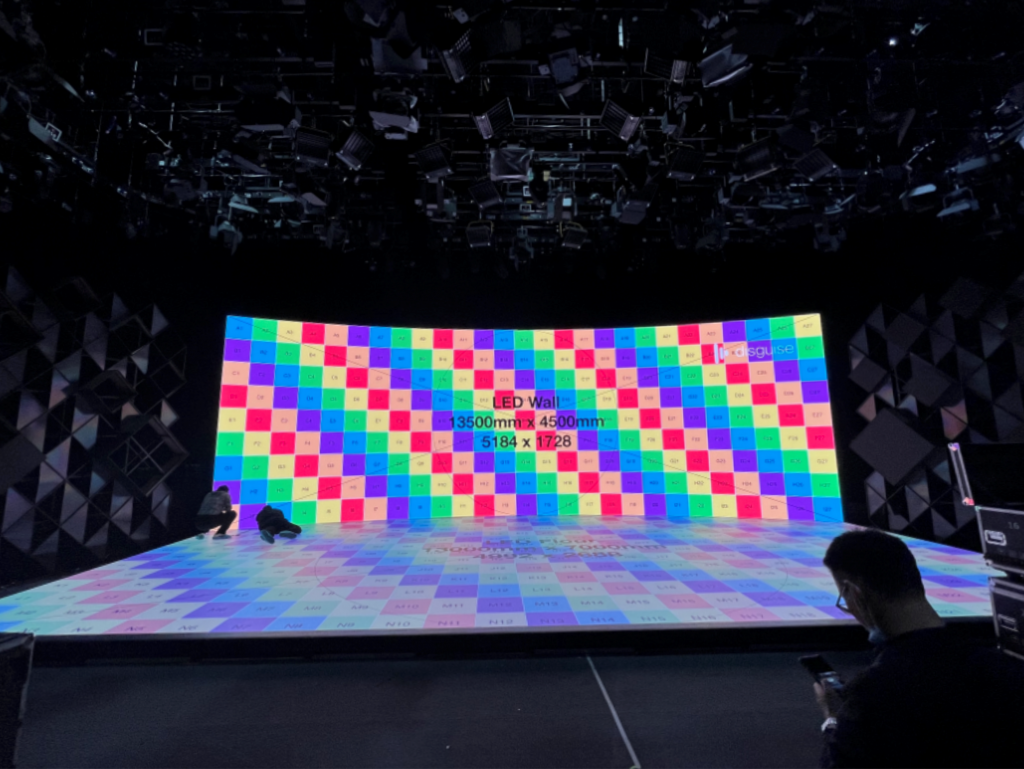
The landscape of modern cinematography is no longer defined by the physical limits of a location, but by the technical capabilities of the screen. As directors and cinematographers move away from the “fix it in post” mentality of green screens, the Virtual Production LED Wall has emerged as the most critical tool in the filmmaker’s arsenal. This technology does more than just display a background; it creates a living, reactive environment that provides the “Final Pixel” directly on set.
At HOLODECK LED™, we engineered the HoloDeck VP™ series specifically for this high-stakes environment. By prioritizing color accuracy, ultra-fast refresh rates, and mechanical precision, we have provided the foundation for some of the world’s most advanced XR labs and ICVFX studios. In this guide, we will deconstruct the science behind the Virtual Production LED Wall and explore why the HoloDeck VP™ is the gold standard for next-generation storytelling.
Shifting From Green Screen to LED Volume
To appreciate the impact of a Virtual Production LED Wall, one must understand the limitations of the traditional green screen. For decades, actors performed in a lime-green void, and cinematographers struggled with “green spill”—the unnatural light reflected onto the subjects.
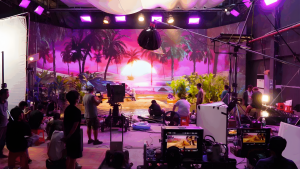
The transition to In-Camera Visual Effects (ICVFX) solves this by replacing the void with a high-resolution digital landscape. The LED wall acts as a massive, intelligent light source. If your scene takes place in a neon-lit cyberpunk city, the pink and blue light is physically hitting the actor’s skin and reflecting in their eyes. This level of biological and physical realism is what differentiates a high-budget production from a generic one.
The Technical “Engine” of the HoloDeck Virtual Production™
A Virtual Production LED Wall is not a standard television. It is a high-performance computer interface that must synchronize with cinema cameras at the micro-millisecond level. To achieve this, the HoloDeck Virtual Production™ is built on four technical pillars:
1. Ultra-Fast Frame Rates and 240fps+ Support
Most standard LED panels operate at 60Hz or 120Hz. However, professional cinematography often requires high-speed shooting for slow-motion action. The HoloDeck Virtual Production™ supports native frame rates of 240fps and beyond. This ensures that even when you are filming a high-velocity car chase or a slow-motion explosion, the background remains fluid and free of “ghosting” or motion artifacts.
2. The 15,360Hz Refresh Rate Benchmark
The most common failure in a DIY Virtual Production LED Wall is the appearance of “scan lines” on camera. This happens when the panel’s refresh rate doesn’t align with the camera’s shutter. Our VP Grade panels utilize advanced driving ICs that reach 15,360Hz, providing a rock-solid image that is invisible to the camera’s sensor, regardless of the shutter angle.
3. Cinematic Color Fidelity (DCI-P3 99.7%)
A screen is only as good as its color language. According to The American Society of Cinematographers (ASC), color consistency is the “make or break” factor for ICVFX. The HoloDeck Virtual Production™ offers 99.7% DCI-P3 color compliance, meaning the digital sky on the screen will perfectly match the physical lighting on the set.
ENGINEER YOUR VISION WITHOUT COMPROMISE
Are you building a boutique ICVFX studio or a flagship broadcast hub? The quality of your wall is the quality of your work. Discover how the HoloDeck Virtual Production™ can transform your production workflow.
Explore the HoloDeck Virtual Production™ Technical Specs
The Importance of Pixel Pitch
In virtual production, the “Moiré effect”—the wavy, distracting patterns that appear when a camera gets too close to the screen—is a constant threat. The solution lies in the relationship between pixel pitch and camera sensor resolution.
The 2.6mm “Sweet Spot”
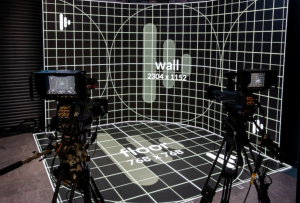
For most mid-to-large-scale volumes, like our project at DXG Studio (Beijing), the 2.6mm VP Grade is the industry standard. It provides the perfect balance between massive scale and high resolution, allowing cameras to move freely through the volume without picking up the digital grid.
The 1.9mm “Close-Up” Precision
For studios where the camera needs to be within three feet of the screen—such as our installation at South Side Studio—we utilize a 1.9mm ultra-fine pitch. This allows for tight, intimate close-ups and “over-the-shoulder” shots that were previously impossible in a Virtual Production LED Wall environment. By increasing the pixel density, we push the “moiré wall” further back, giving cinematographers unprecedented freedom of movement.
The Unreal Engine Connection
A Virtual Production LED Wall is a passive canvas without the “brain” that drives it. The HoloDeck VP™ is engineered to integrate seamlessly with real-time rendering engines like Unreal Engine.
Through specialized hardware like the Brompton Tessera or Megapixel Helios processors, the HoloDeck Virtual Production™ receives real-time spatial data. As the camera moves on a physical track, the digital environment on the LED wall shifts its perspective (parallax) instantly. This synchronization is what creates the “window into another world” effect, making the digital background feel physically present.
Case Study Integration: SMT XR Lab (Shanghai)
The power of the HoloDeck VP™ is best demonstrated in the Shanghai Media Tech (SMT) XR Lab. This hub utilized over 1,020+ panels to create a digital environment. Because the SMT lab focuses on live broadcast, there was zero room for error. The Virtual Production LED Wall had to maintain perfect color tracking and zero-latency performance for hours of live airtime. The result was a seamless, data-driven newsroom that set a new standard for the Asian broadcast market.
The “Zero-Gap” Construction
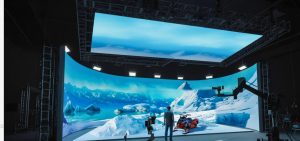
When you are building a wall that stands 20 feet tall and 60 feet wide, mechanical precision becomes a safety and visual requirement. Our “Creation” philosophy ensures that every HoloDeck Virtual Production™ installation is mechanically perfect.
-
King-Pin & Ratchet Locking: Our proprietary locking systems ensure that modules are aligned with sub-millimeter accuracy. Even a 0.5mm gap can cause a “black line” that would be visible to a high-definition camera.
-
Magnesium Alloy Frames: We use lightweight, thermally stable alloys to ensure the wall doesn’t expand or warp under the heat of intense studio lighting. This maintains the “flatness” of the canvas, which is essential for perfect focus.
JOIN THE FINAL PIXEL REVOLUTION
The era of the green screen is over. Don’t let your production be limited by the technology of the past. Build your own high-performance volume with the leaders in cinematic LED engineering.
Contact a HOLODECK LED VP Specialist Today
The ROI of the Virtual Production LED Wall
While the initial investment in a Virtual Production LED Wall is significant, the long-term Return on Investment (ROI) is undeniable.
-
Elimination of Travel Costs: By bringing the world’s locations to your studio, you save millions on flights, hotels, and permits.
-
Accelerated Post-Production: Because you are capturing the “Final Pixel” on set, the time spent in the VFX “edit bay” is reduced by up to 70%.
-
Creative Flexibility: You can change the “Golden Hour” light in five seconds. You can move a mountain to the left or change a city’s skyline on the fly, allowing directors to make creative decisions in real-time rather than waiting for weeks of rendering.
According to a report from SMPTE (Society of Motion Picture and Television Engineers), the efficiency gains of LED-based virtual production are currently the primary driver for studio modernization globally.
Engineering the Future of Storytelling
The Virtual Production LED Wall is more than just a piece of technology; it is the liberation of the human imagination. At HOLODECK LED™, we believe that the only thing the audience should see is your story. By perfecting the HoloDeck VP™ series, we have removed the technical barriers—the flicker, the moiré, and the color shifting—that once plagued the industry.
Whether you are building the next flagship XR hub like SMT Shanghai or a dedicated ICVFX stage like DXG Beijing, our mission remains the same: to provide the pixel-perfect canvas that turns a “set” into a “destination.”
The future of cinema isn’t just being filmed; it is being engineered. Let’s build it together.